


2nd Kautilya Society NLUO Essay Writing Competition
12 Sep 2026
OVERVIEW OF THE INSTITUTION
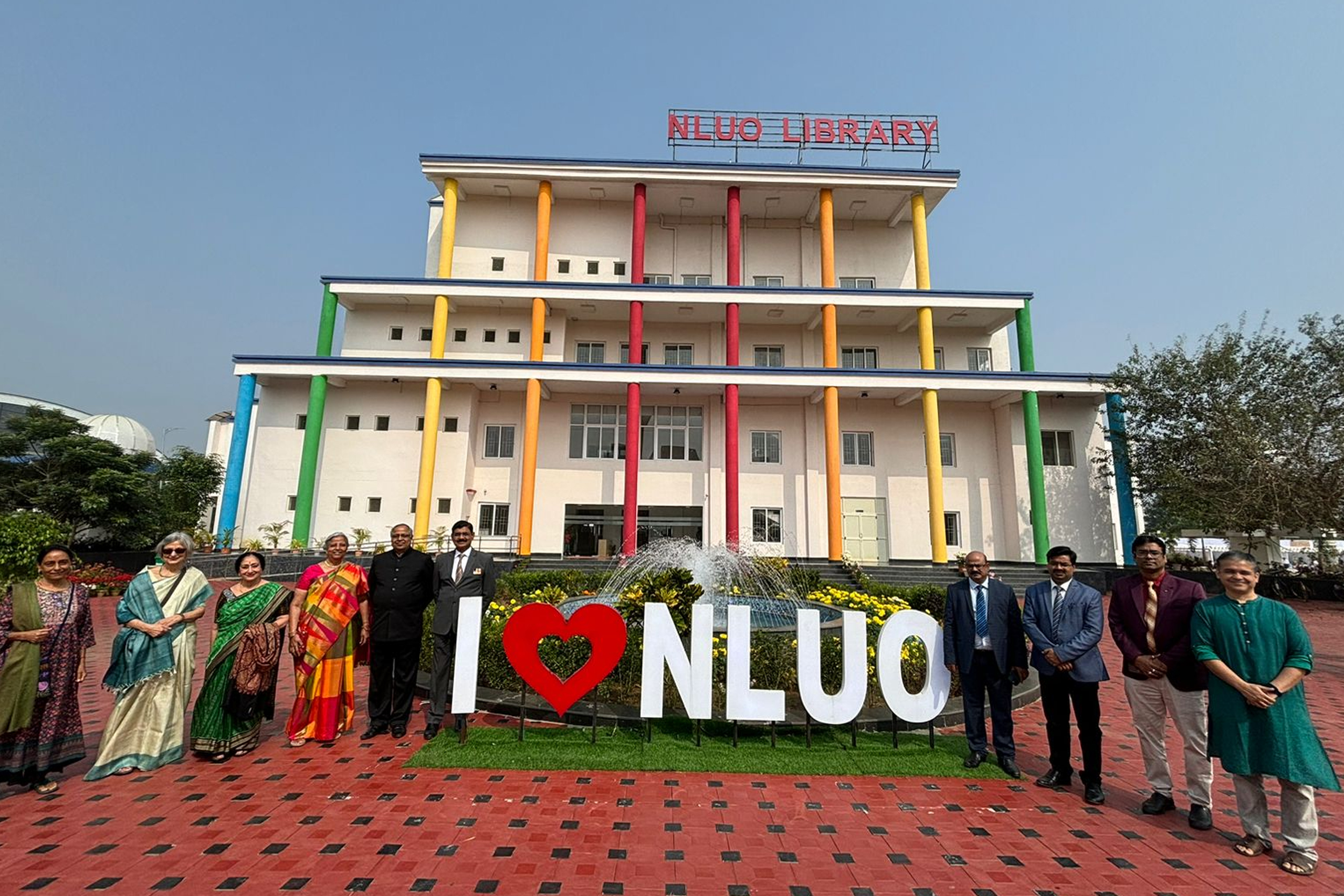
National Law University Odisha, Cuttack was established by Act 4 of 2008 by the Odisha State Legislature keeping in mind an enunciated vision of advancement of learning, teaching, research, diffusion of knowledge in the field of law and catering to the needs of society by developing the professional skills of those intending to take up the professions of Advocacy, Judicial Services, Legal services, and so on. National Law University, Odisha is committed to providing an atmosphere in which academic excellence is the foremost priority for students. Along the lines of this vision, NLUO has significantly catered to the needs of the research in various legal fields by paving way for various dedicated research centers and societies. Such endeavors enable students to pursue individual interests and take part in various literary and recreational activities throughout the academic year.
The Kautilya Society NLUO is one of such initiatives of NLUO which aims at promoting study, research, and informed deliberation in the field of public policy, with an application-oriented and information-dissemination purpose.
ABOUT KAUTILYA SOCIETY NLUO
Kautilya Societies are student initiatives in universities across the country set up by Vidhi Centre for Legal Policy (“Vidhi”) with the aim to widen access to legislative drafting and analysis, and to empower young minds to explore public policy as a career path. The Kautilya Society, NLUO Chapter has been set up at National Law University Odisha, in association with Vidhi Centre for Legal Policy.
The Kautilya Society initiative envisions providing opportunities to their students for successful careers in public policy and other related fields such as development, advocacy, consultancy, campaigning, financial analysis, economics and research. The vision of the society is to provide awareness and opportunities for students to nurture their interest in public service and policy as career options with a view to becoming good citizens of India.
EVENT DETAILS
THEME: Open Theme
Introduction
The Kautilya Society is pleased to announce an Open-Theme Essay Writing Competition, and invites students to showcase their analytical and writing skills. Participants are free to choose a topic of their interest from any area of law, public policy, governance, or any other subject of contemporary relevance. The competition aims to encourage intellectual curiosity, original thought, and informed discourse by providing a platform for participants to explore issues they are passionate about. Essays will be evaluated on originality, depth of analysis, coherence, research quality, and clarity of expression. Even though the essay must revolve around Indian policy, participants may write about international events, given that a strong connection with Indian public policy must be established in the submission.
Eligibility
Students from across Universities/Colleges, duly recognised and registered in India shall be allowed to participate. Students who are not pursuing law but are interested in the subject-area are also allowed to participate.
Submission Guidelines
- Soft copies of manuscripts are to be uploaded through the submission link [Google Form] to be provided to the participants
- The google form that will be used for submission will ask for the following information. Please ensure that the same contact details are used for submission and within the submitted manuscript
- Name
- Contact Number(s)
- Submissions are to be made in the form of MS Word (2007 or 2010 or 2013)
- All submissions are to be made via a google form. (Note: write your name and co-author’s name as the filename. Example: John Davidson.docx or John Davidson, Jay David.docx)
- Manuscript word limit: 1500-2000 (excluding endnotes)
- Any uniform method of end-noting may be used.
- Font: Times New Roman. Font size: 12. Line spacing: 1.5. All text should be justified.
- Each manuscript must contain an Abstract of 50-100 words (not inclusive within the total word count)
- No separate bibliography for references is to be added. All references to be through endnotes only.
- The competition shall follow a strict plagiarism and AI policy. All articles must have a similarity index of less than 10% and 0% Articles with *% on Turnitin shall be duly read to ensure whether the piece is originally written or it has been written by an AI model.
- Manuscript should not have any indication of the Author’s identity.
Please Note:
Manuscripts not in conformity with these guidelines may be rejected at the sole discretion of the Editorial Board. The Editorial Board reserves the right to send the manuscripts back to the authors for any modification(s) at any stage, in the event of non-conformity with any of the submission guidelines. The Editorial Board may, in its absolute discretion, waive any of the above rules or amend the process. In case of any dispute or ambiguity, the decision of the Editorial Board shall be final and binding.
Procedure for checking
- First Stage: This stage shall entail a preliminary check of the article, whether it follows the prescribed formatting guidelines such as being within the word count, not breaching the plagiarism limit, is not AI-written, etc. This stage is to clerically check the article for the basics.
- Second Stage: This stage shall entail the editors to read through the articles, to assess whether the ideas are novel and original, to assess structure of the article and whether proper citations have been provided along with a grammar check. This stage shall also decide which articles are being considered for the prizes and would be forwarded to the external board of editors.
- Third Stage (or the External Panel): This shall be the final stage, where selected articles from the second stage will be forwarded to an External Panel of 3-4 members, which, on request from the Society, may be formed within Vidhi itself, to check and decide the articles which shall be selected for publication on the Website as well as the ones that will be decided as the Winners. A check-sheet shall be duly circulated to the panel as reference to be followed so that uniformity is followed in the final stage.
Manuscripts which are not rejected at the Technical Review stage shall undergo Content Review. The Content Review is conducted in two stages wherein the manuscripts which are fit for publication as is, or do not require significant changes are shortlisted for Peer Review. The manuscripts are evaluated in Content Review on the following five parameters:
- Grammar and Language
The language of the manuscript must be crisp and concise. A direct statement or argument would be preferred over an indirect one and minimum usage of passive voice is recommended. Author(s) must be familiar with the usage of a term used in the manuscript. The author(s) may be marked down for unnecessary repetition, long- winded sentences and irrelevant rhetoric.
- Structure and Logical Coherence
The manuscript must be logically sound and appropriate for the objective it seeks to achieve. Author(s) may be marked down for arguments based on incorrect premises or presumptions, the lack of a clear structure or the lack of a proper logical flow.
- Contribution to Existing Literature
If the topic of the manuscript is one which has been written about extensively in the past, the author(s) must consider what the contribution of the manuscript to the discussion is. Merely quoting and/or summarizing precedents would be inadequate. On the other hand, writing in a more innovative manner and providing a novel explanation/interpretation of a concept would be appreciated.
- Contemporary Relevance
Manuscripts are expected to include recent developments on the topic. A manuscript is considered to possess contemporary relevance when it deals with trending societal issues and legal issues that have not been given the attention they deserve. The topic may also be one that has faded from public memory but has reemerged for some reason. The relevance of the particular topic should be highlighted by the author(s) in the introduction.
- Referencing and Research
The manuscript must reflect substantial and not just superficial research. The author needs to be aware of what citation is required in the circumstances, when to cite (and when not to cite) and the relevance of that citation.
SCHEDULE
| Last date for registration | 18.09.2026 |
| Last date for submission | 28.09.2026 |
FEES
| Single Authorship | Co-Authorship | |
| NLUO Students | Rs. 200 | Rs. 300 |
| Non-NLUO Students | Rs. 300 | Rs. 500 |
REGISTRATION PROCESS
- All participants are requested to pay the registration fee in the following way:
- Visit : https://eazypay.icicibank.com
- Enter Institution Name as ‘National Law University’ and click on ‘Go’
- Fill the details.
- Email id
- Mobile No.
- Amount
- Student Name (Enter your name)
- Roll or Enrolment No. (Enter your Roll / Enrolment number for NLUO students and enter 131 for others)
- Semester (Enter your Semester number for NLUO students and enter 11 for others)
- Year
- Payment Date
- Purpose (Mention KS Essay Writing Competition)
- Once required data is filled in click on ‘Submit’ after enter the captcha and OTP.
- After the payment you will get the auto generated payment receipt.
SUBMISSION PROCESS
- Team codes will be allotted after registration.
- Registration to be done via this form by the 6th of September, 2026.
PRIZES FOR THE TOP 3 PARTICIPANTS (PRIZE POOL- 12.5K)
- Winners: 6,000/-
- Runners-up: 4,000/-
- Second Runners-up: 2,500/-
Winners will receive an internship opportunity at Vidhi Centre for Legal Policy. The top submissions will also be published on the Vidhi Blog subject to approval by External Panel.
CONTACT INFORMATION
For any queries you can mail the Society at ksociety@nluo.ac.in
Further, you can contact the persons below:
Convenor: Aryan Chowdhury (+91 8318262740)
Co-Convenor: Nidhi Rai (+91 9560392741)
Editor-in-Chief: Adrija Dey (+91 9109910526)
