


1ST KAUTILYA SOCIETY NLUO ESSAY WRITING COMPETITION, 2025
01 Dec 2025
1ST KAUTILYA SOCIETY NLUO ESSAY WRITING COMPETITION, 2025 [REGISTRATION EXTENDED]
OVERVIEW OF THE INSTITUTION
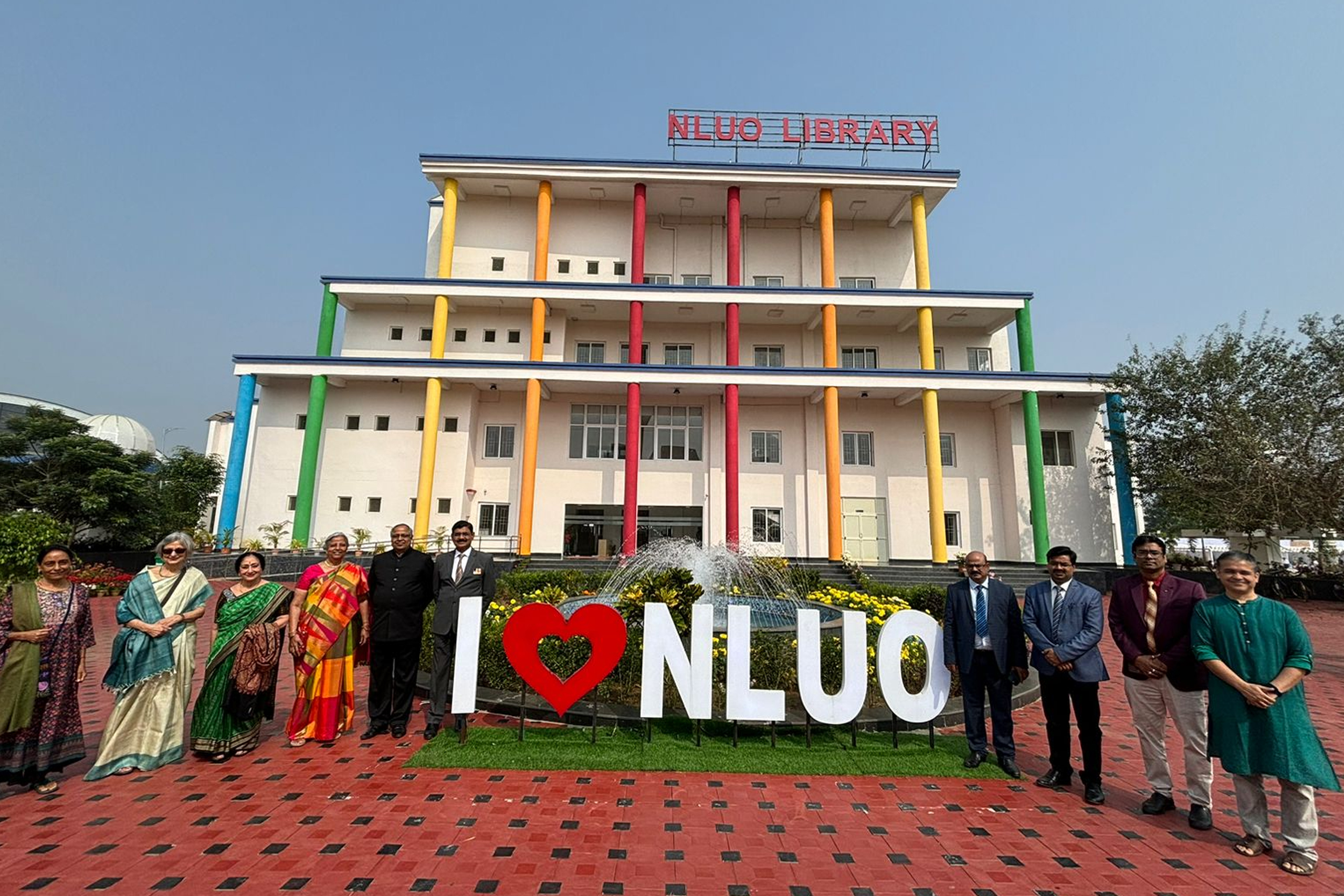
National Law University Odisha, Cuttack was established by Act 4 of 2008 by the Odisha State Legislature keeping in mind an enunciated vision of advancement of learning, teaching, research, diffusion of knowledge in the field of law and catering to the needs of society by developing the professional skills of those intending to take up the professions of Advocacy, Judicial Services, Legal services, and so on. National Law University, Odisha is committed to providing an atmosphere in which academic excellence is the foremost priority for students. Along the lines of this vision, NLUO has significantly catered to the needs of the research in various legal fields by paving way for various dedicated research centers and societies. Such endeavors enable students to pursue individual interests and take part in various literary and recreational activities throughout the academic year.
The Kautilya Society is one of such initiatives of NLUO which aims at promoting study, research, and informed deliberation in the field of public policy, and its allied subjects with a policy and application-oriented purpose.
ABOUT KAUTILYA SOCIETY NLUO
Kautilya Societies are student initiatives in universities across the country set up by Vidhi Centre for Legal Policy (“Vidhi”) with the aim to widen access to legislative drafting and analysis, and to empower young minds to explore public policy as a career path. The Kautilya Society, NLUO Chapter has been set up at National Law University Odisha, in association with Vidhi Centre for Legal Policy.
The Kautilya Society initiative envisions providing opportunities to their students for successful careers in public policy and other related fields such as development, advocacy, consultancy, campaigning, financial analysis, economics and research. The vision of the society is to provide awareness and opportunities for students to nurture their interest in public service and policy as career options with a view to becoming good citizens of India.
EVENT DETAILS
THEME: Arbitration and Public Policy in India
Introduction
Arbitration has been constantly posited as a totally private dispute resolution mechanism for parties to resolve any contractual breaches or disagreements privately, without having to resort to the courts. Arbitration is seen as providing a ‘double solution’, it firstly, helps to unburden the Court’s caseload and secondly, it ensures confidentiality between parties, helping to forego any unnecessary public scrutiny. However, it has been observed, and even, lamented upon, that the present arbitral system in India has not helped with any of the following. In fact, enforcement petitions have posed to be a major roadblock to the ‘speedy’ nature of arbitrations, with enforcement petitions being delayed as much as 5 years. Such has been the case of arbitration in India, that as recent as in 2023, the Ministry of Finance even rolled out a Circular, discouraging the inclusion of arbitration in public procurement contracts.
In light of this scenario, literature on Indian arbitration does not fulfil the discussion it begets. Public policy is the biggest challenge posed during enforcement proceedings, so that the award is not converted into a binding judgment. Hence, an Essay Writing Competition on the theme of “Arbitration and Public Policy in India” will not only help add literature to this ever-contentious issue, but also allow the authors make themselves aware with how public policy and arbitration constantly clash, collide and sometimes, be harmonious to each other in high stakes arbitrations.
Sub-Themes
- Arbitrability of Workplace Sexual Harassment Claims.
- The ‘Ghost in the Machine’: AI-Assisted Arbitral Awards and the Public Policy Challenge.
- Green Arbitration: Reconciling Investor Protection with Climate Change Public Policy.
- Data Sovereignty vs. Arbitral Confidentiality: A New Public Policy Frontier.
- Third-Party Funding and Public Policy: A Necessary Evil or a Modern Tool for Justice?
- Inclusion of Civil Procedures in Ad-hoc Arbitrations: Necessary for Proper Disposal or Infringement on Autonomy?
The above themes are suggestive and the authors are free to submit pieces on any other subject which falls within the broad theme of the intersection of arbitration and public policy.
Eligibility
- Students pursuing Five-Year/Three-Year LLB Discipline
- Students pursuing One-Year/Two-Year LLM Discipline
- Students who are not pursuing law but are interested in the subject-area are also allowed to participate.
Submission Guidelines
- Submissions shall be made in .doc/.docx format (Word 2007 or 2010 or 2013).
- All submissions are to be made via a google form. (Note: write your submission’s title as the filename. Example: the arbitrability of tenancy matters.docx).
- The google form that will be used for submission will ask for the following name:
- Name
- Contact Number(s)
- The name of the file or the file in no place shall indicate the identity of the author(s).
- Manuscript word limit: 1500-2000 (excluding endnotes)
- Hyperlinking shall be preferred mode of referencing. If hyperlinking is not possible, then end-noting may be resorted to.
- Font: Times New Roman. Font size: 12. Line spacing: 1.5. All text should be justified.
- Each manuscript must contain an Abstract of 50-100 words (not inclusive within the total word count)
- The competition shall follow a strict plagiarism and AI policy. All articles must have a similarity index of less than 10% and 0% Articles with false positives shall be duly read to ensure whether the piece is originally written or it has been written by an AI model.
- Your essay should be error-free; grammar, spelling, punctuation etc.
- It is recommended that the authors visit the Vidhi website to get a better understanding on the type of submissions that the Editorial Board looks forward to receiving.
Please Note:
Manuscripts not in conformity with these guidelines may be rejected at the sole discretion of the Editorial Board. The Editorial Board reserves the right to send the manuscripts back to the authors for any modification(s) at any stage, in the event of non-conformity with any of the submission guidelines. The Editorial Board may, in its absolute discretion, waive any of the above rules or amend the process. In case of any dispute or ambiguity, the decision of the Editorial Board shall be final and binding.
Process of Evaluation
All articles to go through a three-tiered editorial process. They are as follows
- First Stage: This stage shall entail a preliminary check of the article, whether it follows the prescribed formatting guidelines such as being within the word count, not breaching the plagiarism limit, is not AI-written, etc. This stage is to clerically check the article for the basics.
- Second Stage: This stage shall entail the editors to read through the articles, to assess whether the ideas are novel and original, to assess structure of the article and whether proper citations have been provided along with a grammar check. This stage shall also decide which articles are being considered for the prizes and would be forwarded to the external board of editors.
- Third Stage (or the External Panel): This shall be the final stage, where selected articles from the second stage will be forwarded to an External Panel of 3-4 members to decide the articles which shall be selected for publication on the Vidhi Blog as well as the Winners of the Competition. Publication on the Vidhi Blog is at the discretion of the External Panel.
SCHEDULE
The provisional schedule is as follows:
| Last date for registration (extended) | 07.12.2025 |
| Last date for submission (extended) | 22.12.2025 |
FEES
| Participants | Fees (in Rs) | Mode | |
|---|---|---|---|
| NLUO Students | Non-NLUO Students | ||
| Around 100 | Single authorship – 150 Co-authorship – 250 |
Single authorship – 250 Co-authorship – 400 |
Online |
REGISTRATION PROCESS
- All participants are requested to pay the registration fee in the following way:
- Visit https://eazypay.icicibank.com
- Enter Institution Name as ‘National Law University’ and click on ‘Go’
- Fill the details.
- Email id
- Mobile No.
- Amount
- Student Name (Enter your name)
- Roll or Enrolment No. (Enter your Roll / Enrolment number for NLUO students and enter 131 for others)
- Semester (Enter your Semester number for NLUO students, and enter 11 for others)
- Year
- Payment Date
- Purpose (Mention KS Essay Writing Competition)
- Once required data is filled in click on ‘Submit’ after enter the captcha and OTP.
- After the payment you will get the auto generated payment receipt.
The registration form must be filled by 11:59 P.M., 7th December, 2025
via: https://docs.google.com/forms/d/e/1FAIpQLSdb68yibhXHJ4Pt5rQwYKgm-LJXh18142HLUpDZ_AvroVP3Bg/viewform
SUBMISSION PROCESS
- Team codes will be allotted after registration.
- Submission must be done by 11:59 P.M., 22nd December 2025
- via this form: https://docs.google.com/forms/d/e/1FAIpQLSdVc1YhjGHkEmqSbdDEMf3OV5JWM4kbbGZyOKCWehh1gEF6-A/viewform
- Please ensure that details provided in the registration form is same as in the submission form.
PRIZES FOR THE TOP-3 PARTICIPANTS (PRIZE POOL – 9.5K)
- Winners: 5,000/-
- Runners-up: 3,000/-
- Second Runners-up: 1,500/-
The top submissions will also be published on the Vidhi Blog subject to the discretion of the External Panel.
CONTACT INFORMATION
For any queries you can mail the Society at ksociety@nluo.ac.in
Further, you can contact the persons below:
Convenor: Mridula Singh Bhatti (+91 9315900895)
Co-Convenor: Vibha Vaikuntanath (+91 9113841237)
Editor-in-Chief: Aryan Chowdhury (+91 8318262740)
